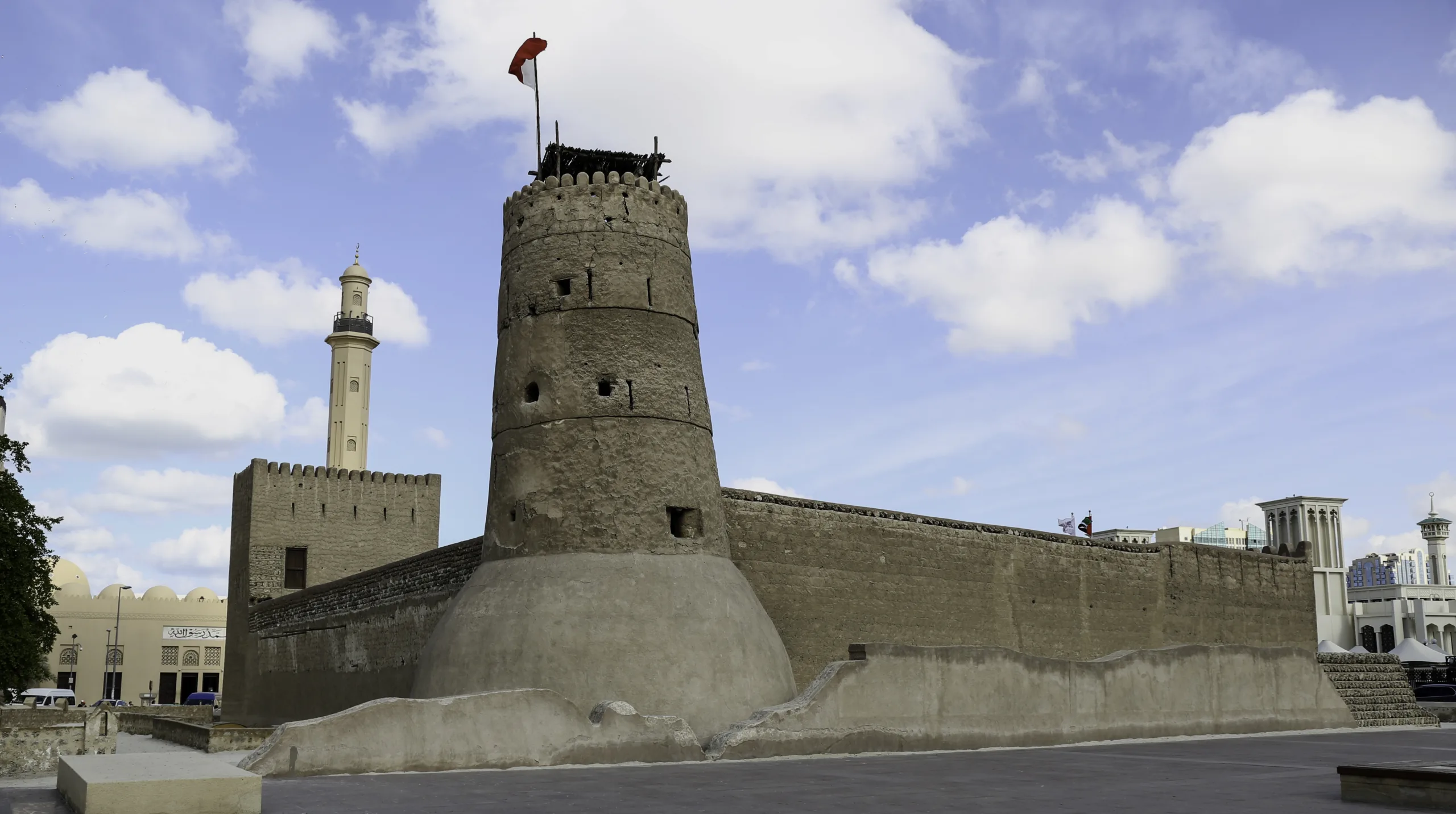
Dubai’s Al Fahidi Fort has reopened following a comprehensive restoration, with Sheikh Mohammed bin Rashid Al Maktoum, Vice President and Prime Minister of the UAE and Ruler of Dubai, visiting its redeveloped museum.
The museum combines historical objects, archival documents and interactive displays to explore the fort’s changing roles since its construction in 1787. Its six main galleries house more than 700 heritage and historical items, including archaeological artefacts and Islamic arms and armour.
“Al Fahidi Fort connects generations to Dubai’s history through a museum and cultural experience that highlights the civilisational and human values that shaped our society. It offers our children an opportunity to discover the foundations upon which the emirate was built and the lessons and experiences of its past,” Sheikh Mohammed said during the visit.
“Our museums are cultural beacons that preserve our memory and tell the story of a people who held firmly to their values and built their nation with determination and resolve. Today, we reopen the doors of Al Fahidi Fort so it can remain a living landmark that tells the story of Dubai and its people. We want our children to know where we began, and the world to discover our culture and history, from which we draw strength to continue building and shaping the future. Dubai has long been a meeting place for traders and a destination for those seeking a better life and promising opportunities. It will continue to be a home for cultures and a centre for human and civilisational exchange,” he added.
Inside the galleries
The displays examine both the fort’s defensive role and the everyday lives of people who lived and worked there. Memories of Al Fahidi Fort uses audiovisual accounts to tell their stories, while A Landmark Across the Ages follows the building’s changing functions.
The Vault focuses on the development of defence in Dubai and the UAE, alongside Sheikh Mohammed’s military career. Its exhibits include pieces of his military uniform, communications equipment, military musical instruments and weapons used across different periods.
A separate gallery presents Islamic arms and armour, with an emphasis on craftsmanship and decorative techniques. Defence Fortifications places the building within the UAE’s network of forts and watchtowers, examining their architecture and role in protecting communities.
The final gallery, The Fort Today and Tomorrow, leads visitors back to the main gate.
A former seat of government
Al Fahidi Fort, Dubai’s oldest standing historic building, served as the seat of government until 1896. It also functioned as an administrative centre and a storehouse before becoming the emirate’s first museum in 1971 under the directives of the late Sheikh Rashid bin Saeed Al Maktoum.
The fort and its Murabba’ah Tower remain part of the visitor experience. Built with coral stone and gypsum, the tower has walls about two metres thick.
Sheikha Latifa bint Mohammed bin Rashid Al Maktoum, Chairperson of Dubai Culture and Arts Authority, said the redevelopment was intended to preserve the fort’s heritage while making it accessible to communities and international visitors.
“As Al Fahidi Fort reopens its doors, it invites our children to discover the lives of those who came before them and the values that helped shape Dubai. Once a guardian of the city, the Fort continues to safeguard its heritage. Within its walls lives the memory of a community whose connection to its roots has allowed it to grow. The Fort has witnessed Dubai’s transformation, from the foundations of its modern development laid by the late Sheikh Rashid bin Saeed Al Maktoum to the new possibilities realised under the leadership of His Highness Sheikh Mohammed bin Rashid Al Maktoum. As the city has grown around it, the Fort has remained a place of connection between generations, reminding us that our heritage gives depth and direction to the future we are building,” she said.
“Today, Al Fahidi Fort continues its role as a museum that holds Dubai’s memory and shares the stories and values of its people with future generations. When our children understand the experiences that shaped their city, they gain a deeper sense of belonging and a clearer understanding of what they carry forward. Through this connection, our past remains a living source of strength and inspiration for all that Dubai can become,” she added.
Restoration partners included the Ministry of Defence, Dubai’s Roads and Transport Authority, Dubai Municipality and the Dubai Department of Economy and Tourism.