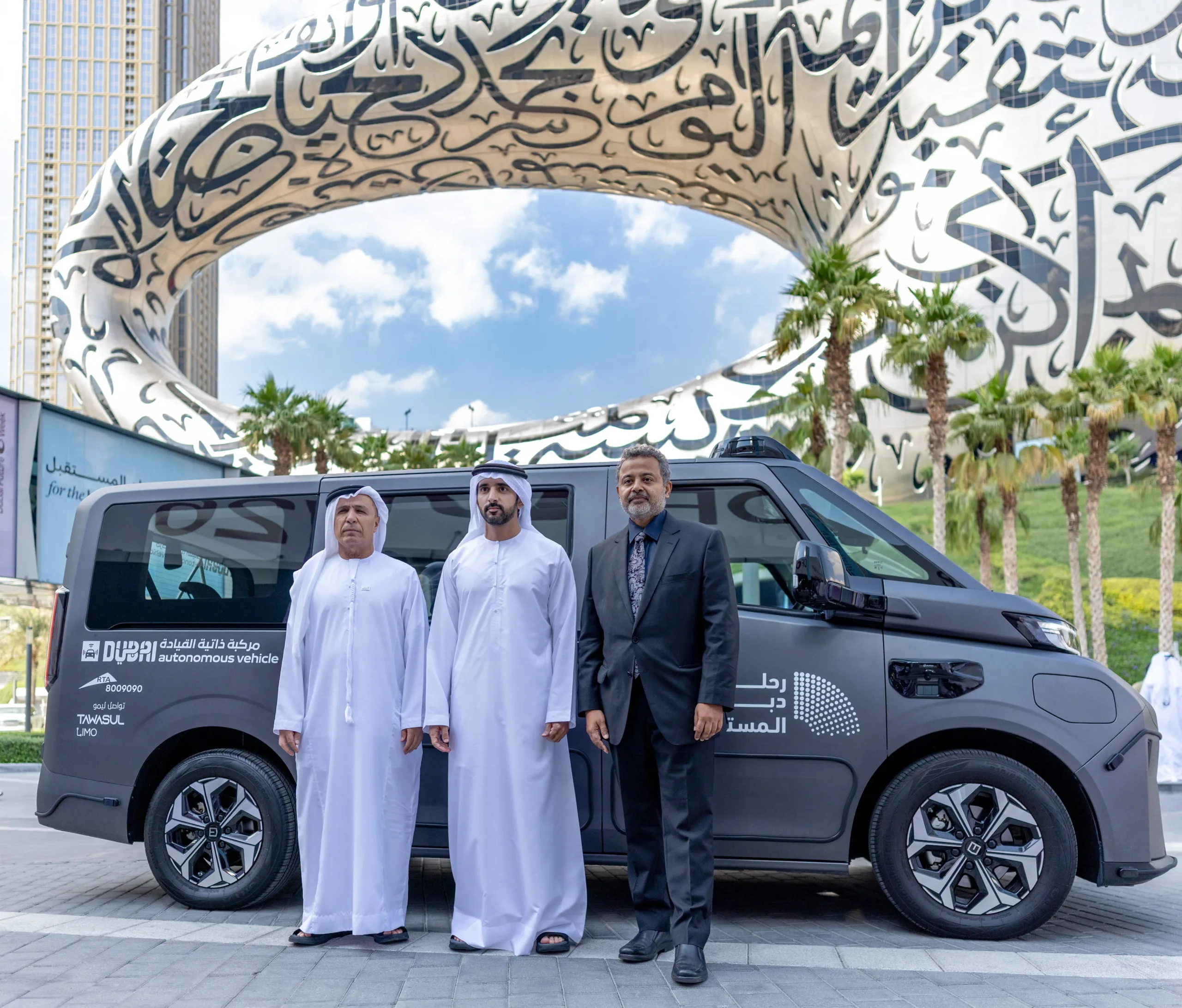
Uber plans to invest approximately AED184 million ($50 million) over the next two years to expand autonomous rides in Dubai. The company outlined its plans during a briefing for Sheikh Hamdan bin Mohammed bin Rashid Al Maktoum at Dubai Future Week on 18 November.
The investment will support operating infrastructure and partnerships with autonomous driving companies. Uber aims to widen the reach of its commercial autonomous vehicle services across the emirate by the end of 2027.
For passengers, the next phase will bring door-to-door journeys within Jumeirah and Umm Suqeim through the Uber app. Riders will be able to book trips within the designated service area without using fixed pick-up and drop-off stations, including journeys between Kite Beach and Madinat Jumeirah.
Uber also plans to extend the service to Downtown Dubai, Dubai International Financial Centre (DIFC) and Business Bay, connecting more residential areas with business districts and tourist destinations.
The initial expansion will not be fully driverless. Vehicles operating in these areas will carry an onboard specialist to monitor journeys. Fully driverless commercial services are planned for the following months, subject to operational readiness and regulatory approval.
Mattar Al Tayer, director general and chairman of the Board of Executive Directors of Dubai’s Roads and Transport Authority (RTA), described the planned investment as a move beyond testing.
“Uber’s plans to invest approximately AED184 million in expanding autonomous mobility services in Dubai reflect global confidence in the emirate’s investment environment, advanced infrastructure, agile regulatory framework and clear vision for the future of mobility. This investment represents an important step in the transition from pilot projects and limited autonomous vehicle operations towards the wider deployment of integrated commercial services. It will support the Dubai Autonomous Transportation Strategy’s target of making 25% of all transportation trips autonomous by 2030, while enhancing transport efficiency, improving road safety and providing more flexible and sustainable mobility options,” Al Tayer said in a statement.
“RTA remains committed to strengthening strategic partnerships with leading international companies specialising in autonomous driving technologies and leveraging their technical and operational expertise to accelerate the adoption of future mobility solutions. The next phase will focus on the carefully planned expansion of autonomous vehicle operations, further developing the regulatory framework and supporting infrastructure, and maintaining the highest standards of safety and operational efficiency,” he added.
Al Tayer said the next phase would include work on regulation and supporting infrastructure, alongside closer links with public transport and first- and last-mile services.
The plans support Dubai’s Autonomous Transportation Strategy, which targets autonomous journeys accounting for 25% of all transportation trips in the emirate by 2030. That is a citywide target, rather than a commitment covering Uber’s fleet alone.