For most people, the word “bunker” brings in a particular image: concrete walls, tinned food, the kind of catastrophic thinking that arises at the height of global unrest.
That image, according to those who design and build them, is now out of date. However, a growing number of ultra-high-net-worth individuals across the world are eyeing environments that are not built for fear, but for what their architects describe as systems-aware resilience.
Founded by Al Corbi, a veteran security engineer and designer, US-based SAFE (Strategically Armored & Fortified Environments) is a key player in this shift.
“Over decades, he worked on projects that required deep coordination with government entities, high-profile principals, and sensitive facilities – long before the term “resilience” became fashionable. He built the company around a simple principle: security must be engineered into the structure itself, not bolted on after the fact. That philosophy still defines us today,” Naomi Corbi, Executive Partner at Director of Operations at SAFE told Lana in an exclusive interview.
But, why the ultra-wealthy are investing in bunkers now?
They are responding to what Corbi describes as an accumulation of “overlapping stressors” such as geopolitical fragmentation, cyber vulnerability, infrastructure fragility, biosecurity concerns, and supply chain instability.
“Bio-risk in particular is shifting in a worrying direction: it’s becoming easier to devise and harder to attribute,” Corbi said.
“The tools and knowledge base are more accessible than ever, and the barrier to entry is dropping – meaning you don’t need a state-level programme to create outsized disruption.”
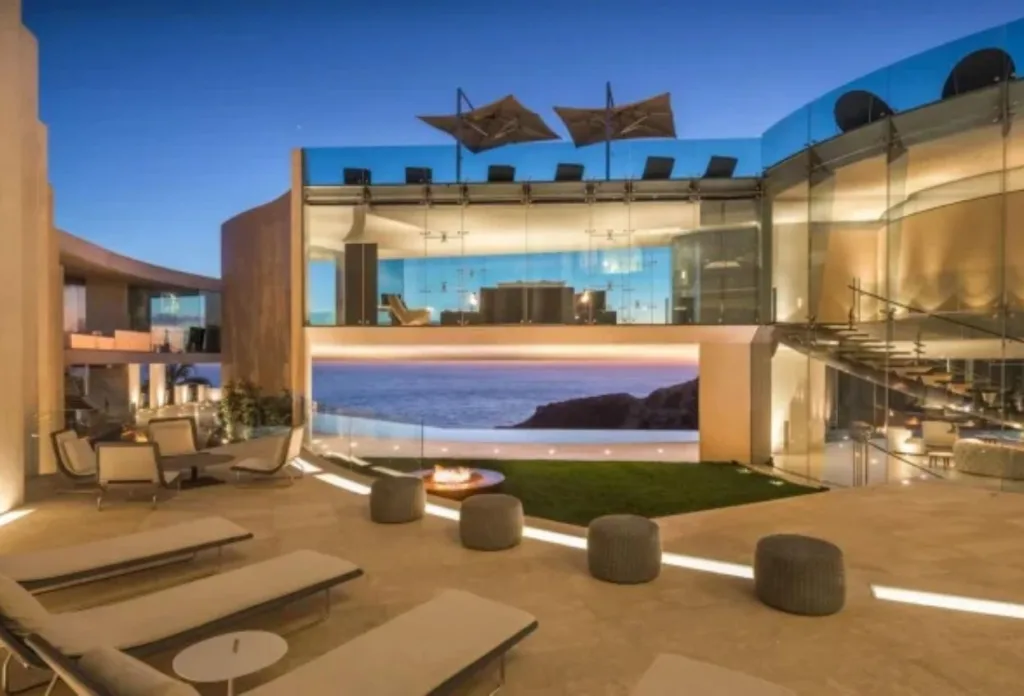
The point, she argued, is that wealth does not reduce exposure to these threats. In many cases, it amplifies it. “This isn’t fear-driven spending,” she said. “It’s systems-aware investing. It’s less ‘apocalypse’ and more ‘we don’t want our lives to depend on a fragile network.’”
The threat profile is rarely a single, cinematic event, she explained, adding that it is mainly compound disruption.
“Grid instability, cyber-physical attacks, civil unrest, targeted violence, biosecurity events, infrastructure failures during natural disasters. The modern threat profile is hybrid: digital meets physical, political meets biological. The real risk isn’t a single event – it’s cascading failure.”
According to Corbi, a private bunker meant reinforced concrete and a stockpile of supplies, ten years ago. However, today’s structures are not hiding spaces but “continuity platforms” – independent systems capable of sustaining life, communications, and operations for extended periods without relying on external infrastructure.
“They’ve evolved from hardened rooms into integrated systems,” she explained. “Now it’s independence: resilient power and water, advanced filtration, secure communications, biomedical readiness, and psychological sustainability.”
With Corbi’s background in biochemistry and nursing, the company has further expanded its original engineering foundation to include something that looks not only at structural security, but at how human systems, political systems, and biological systems behave under stress.
“At SAFE, we don’t build bunkers. We build survivable ecosystems,” she said.
SAFE billionaire bunkers are designed for the nervous system
Moreover, when it comes to design priorities, Corbi said life support, true independence, and psychological stability come first.
“Luxury is meaningless if the air system can’t keep up, water isn’t genuinely secure, or the environment quietly breaks people after a week. We start with redundancy, a realistic threat profile, and human factors – because survival is a systems problem, not a décor problem. Marble can wait. Oxygen can’t,” she said, adding that the psychological dimension of design is one that Corbi returns to repeatedly.
Prolonged stress, she noted, affects cognition, sleep, immunity, and decision-making. An environment that fails to account for these factors is, in her view, not truly secure at all.
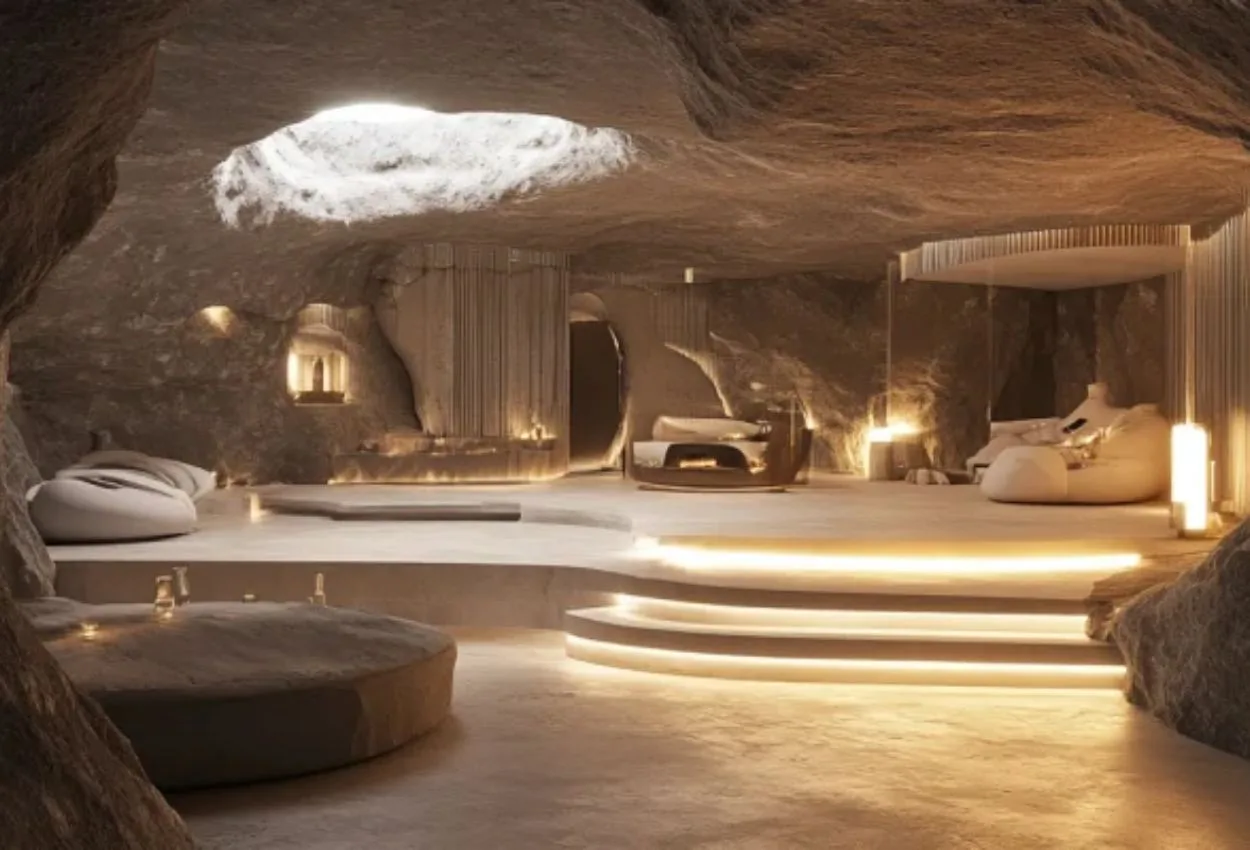
“You design for the nervous system,” she explained. “Lighting temperature, acoustics, ceiling height, material warmth, biophilic elements, and circadian rhythm all matter. A bunker shouldn’t feel like a vault. It should feel like control.”
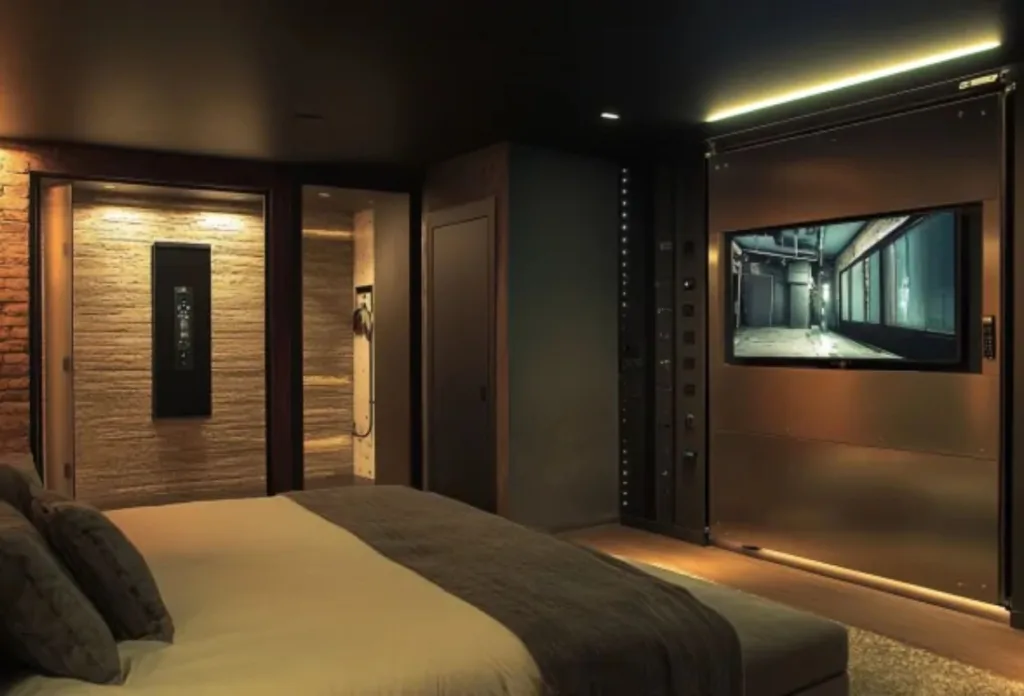
That said, resilience also has a definition that is at once technical and philosophical. “Resilience means you don’t need permission from the outside world to function,” Corbi says. “It’s the ability to operate, communicate, breathe, and think clearly without relying on unstable external systems. Resilience is autonomy under pressure.”
High-end private systems range from “several million” dollars into figures that are, as Corbi puts it, significantly higher depending on scope and systems integration.
“There are very different categories: safe rooms, fortified residences, subterranean autonomous complexes, and multi-site continuity networks,” she said.
When asked what drives the price upwards, Corbi explained that it is not concrete or construction in the conventional sense, but rather “true independence.”
“Energy redundancy, water autonomy, advanced filtration, EMP hardening, secure communications, and medical capability are the major cost drivers because they turn a structure into a self-sustaining system. The most expensive part of a bunker isn’t concrete – it’s autonomy.
Billionaire bunkers are not luxury playgrounds or purchased in a panic moment
Yet there are misconceptions about these billionaire bunkers. According to Corbi, people assume that these structures are purchased in a moment of panic.
The reality, she said, is almost the opposite. “In reality, the people commissioning these spaces are disciplined, analytical decision-makers – this is continuity planning, not drama. Another misconception is that they’re luxury playgrounds; the smartest builds are strategic, discreet, and operational,” she said, adding that the sector is moving towards bunker structures that are not only more capable, but less visible.
“Think environmental controls, cyber-secure operational hubs, embedded health diagnostics, and networked continuity across multiple geographic sites. SAFE is operating in the future, our bunkers aren’t a place you run to, they’re part of how you live,” she said.
“Security used to mean walls. Now it means foresight. We don’t design for paranoia, we design for preparedness. And when preparedness is done properly, it’s actually calming. Real security isn’t dramatic, it’s quiet, redundant, and boringly reliable,” she concluded.